Bloom
Cultivating Open Conversations on Sexual Health Through Interactive Care
Client - Utrecht, Leiden & Erasmus Medical Centers (Netherlands)
Speculation Design
20 min read

My Role
Product Designer
Team
Akshat Choudhary,
Izzy Harris,
Matt Lievaert and
Valesca Stallenberg
Duration
6 months
What Did I do?
User Research
Wireframing
Strategist
UI Design
Interaction
Prototype
Design Process
This project follows the Vision in Product Design ViP method developed by Paul Hekkert and Matthijs van Dijk, a future driven design approach that begins not with problems, but with envisioning the world we want to create.
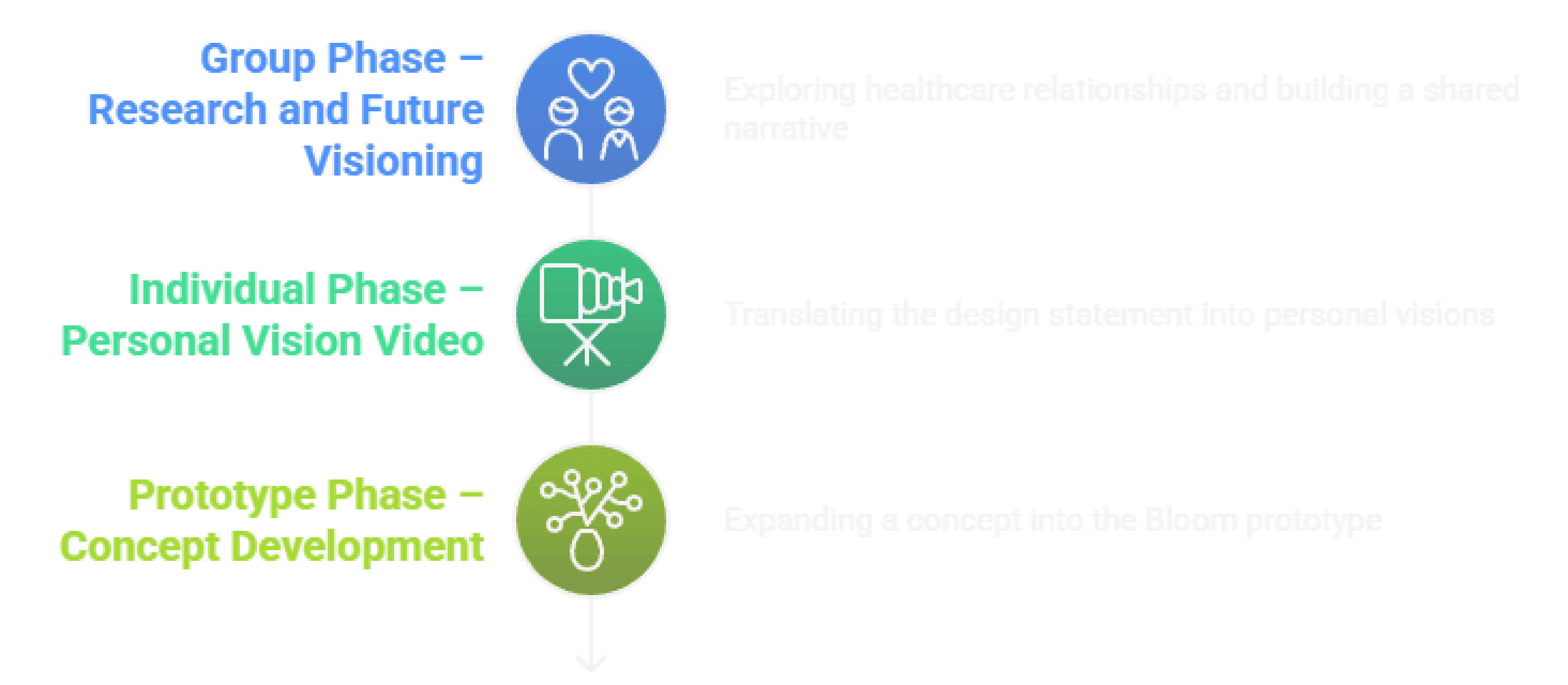
The process was divided into three structured phases, each shaping the next:
Overview
Bloom is a speculative design project that reimagines how young couples engage with sexual health through empathy, responsibility, and shared care. The project stems from the theme “Exploring Relationships in Healthcare” and addresses the taboo surrounding open conversations about sexual well being. It encourages users to nurture their emotional and sexual health in the same way they would care for a plant regularly, gently, and with intention.
Project Brief
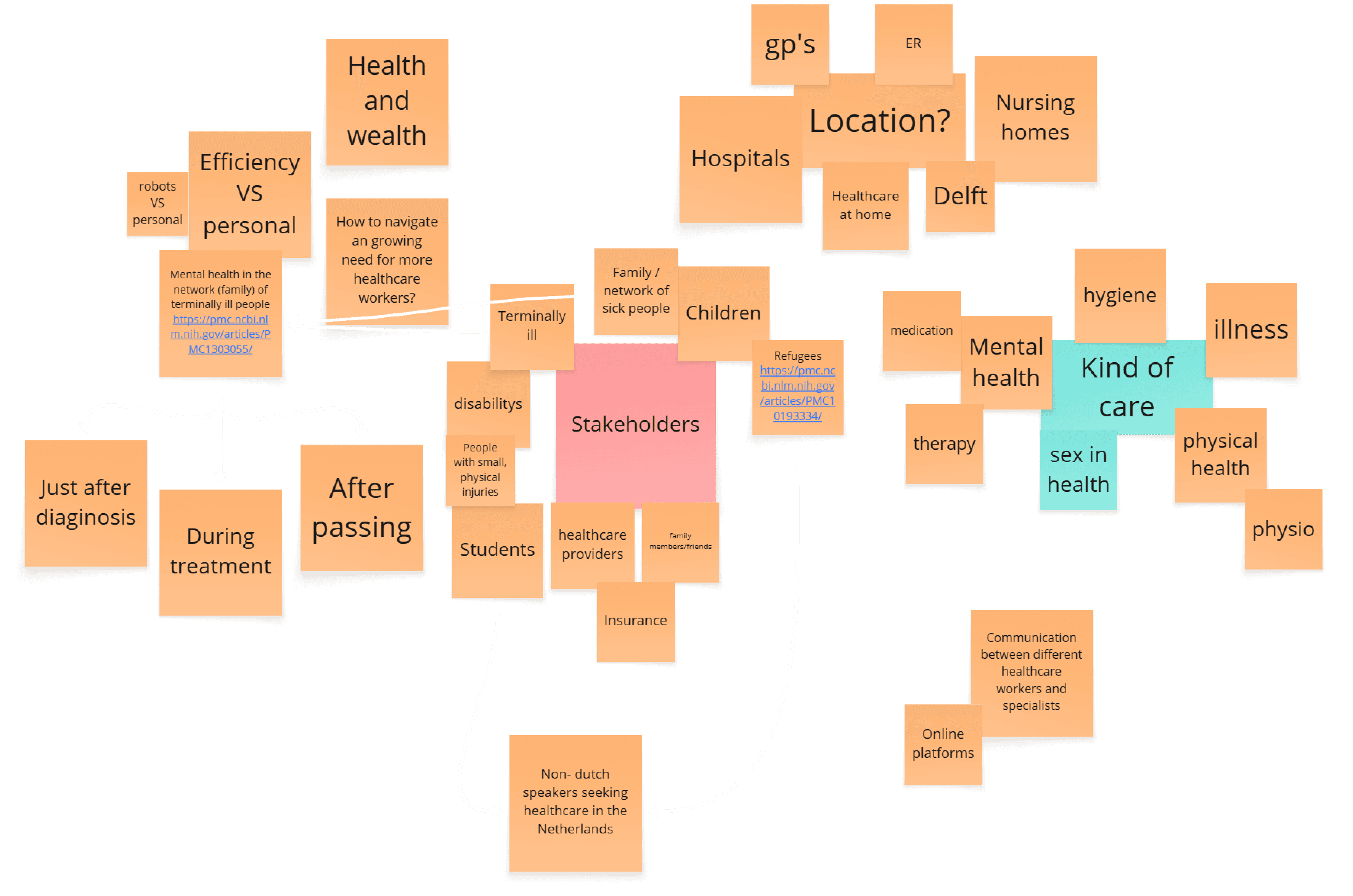
Our project began with the theme “Exploring Relationships in Healthcare.” While mapping different areas of care from physical to mental health we noticed how rarely people discuss sexual health. It’s still seen as uncomfortable or taboo, even though it’s an important part of overall well being.
Probes and Early Exploration
To understand how people actually behave and feel, each team member ran individual probes on campus and conducted supporting secondary research. These quick, informal interactions helped us uncover real attitudes, hesitations, and misunderstandings around sexual health communication.
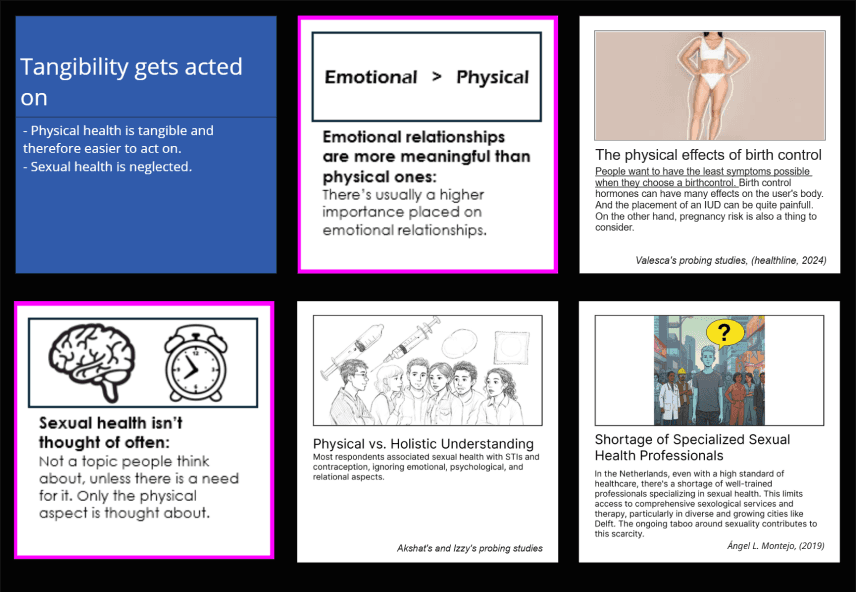
We later brought all our probe findings together and transformed them into context factors short, meaningful insights describing the world around our topic.
My Individual Probe
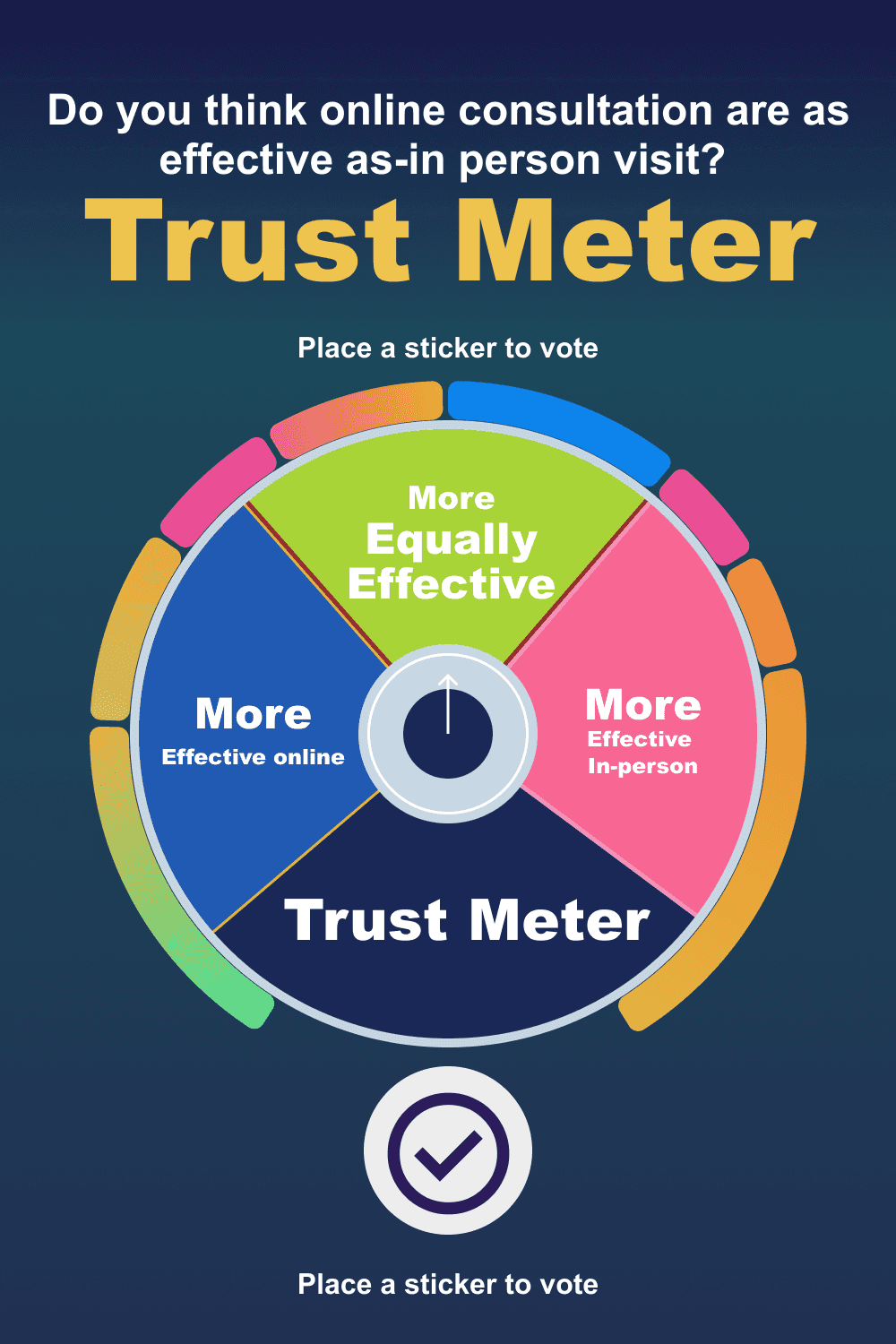
For my probe, I created an interactive poster with a trust meter, asking students whether they felt online sexual health consultations were as effective as in person visits. Participants could anonymously place stickers and write short notes explaining their choice.
This simple setup allowed me to observe:
comfort levels when discussing sexual health
preferences between online and offline care
hesitations caused by stigma, privacy concerns, or embarrassment
contradictions in what people say vs. what they feel
PHASE 1
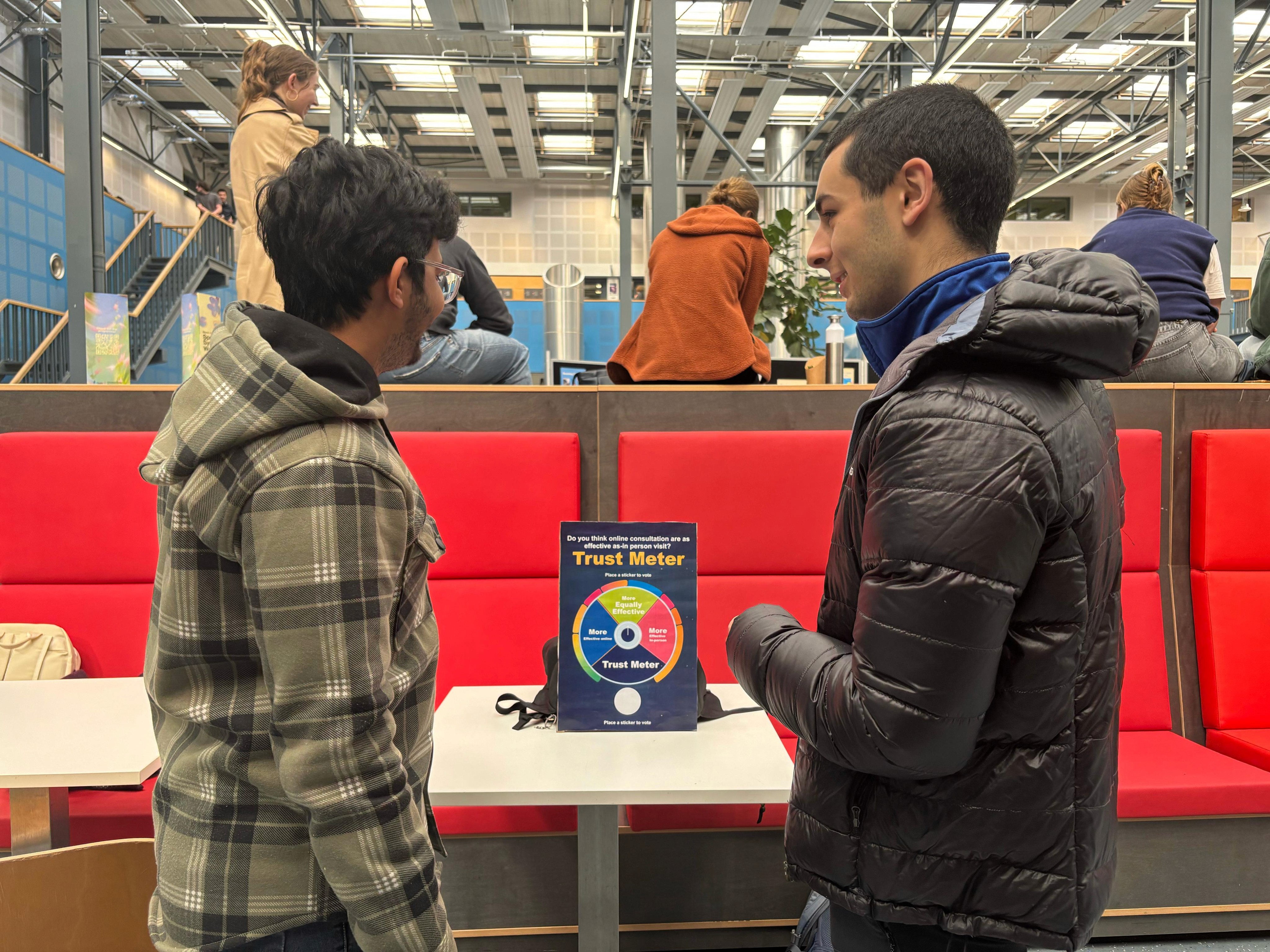
These real reactions became valuable context factors, contributing to our group’s understanding of how stigma and responsibility shape sexual health communication.
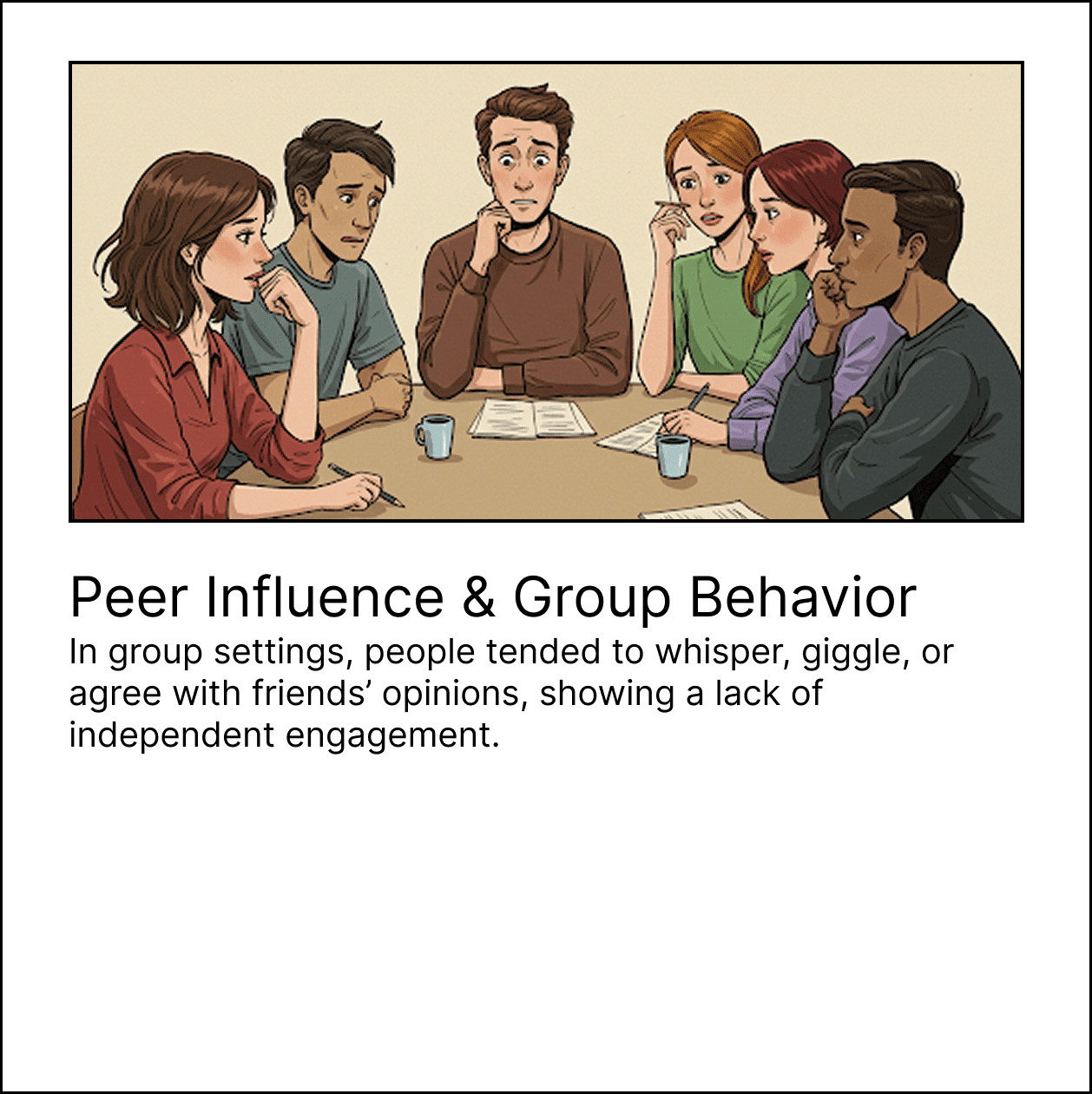
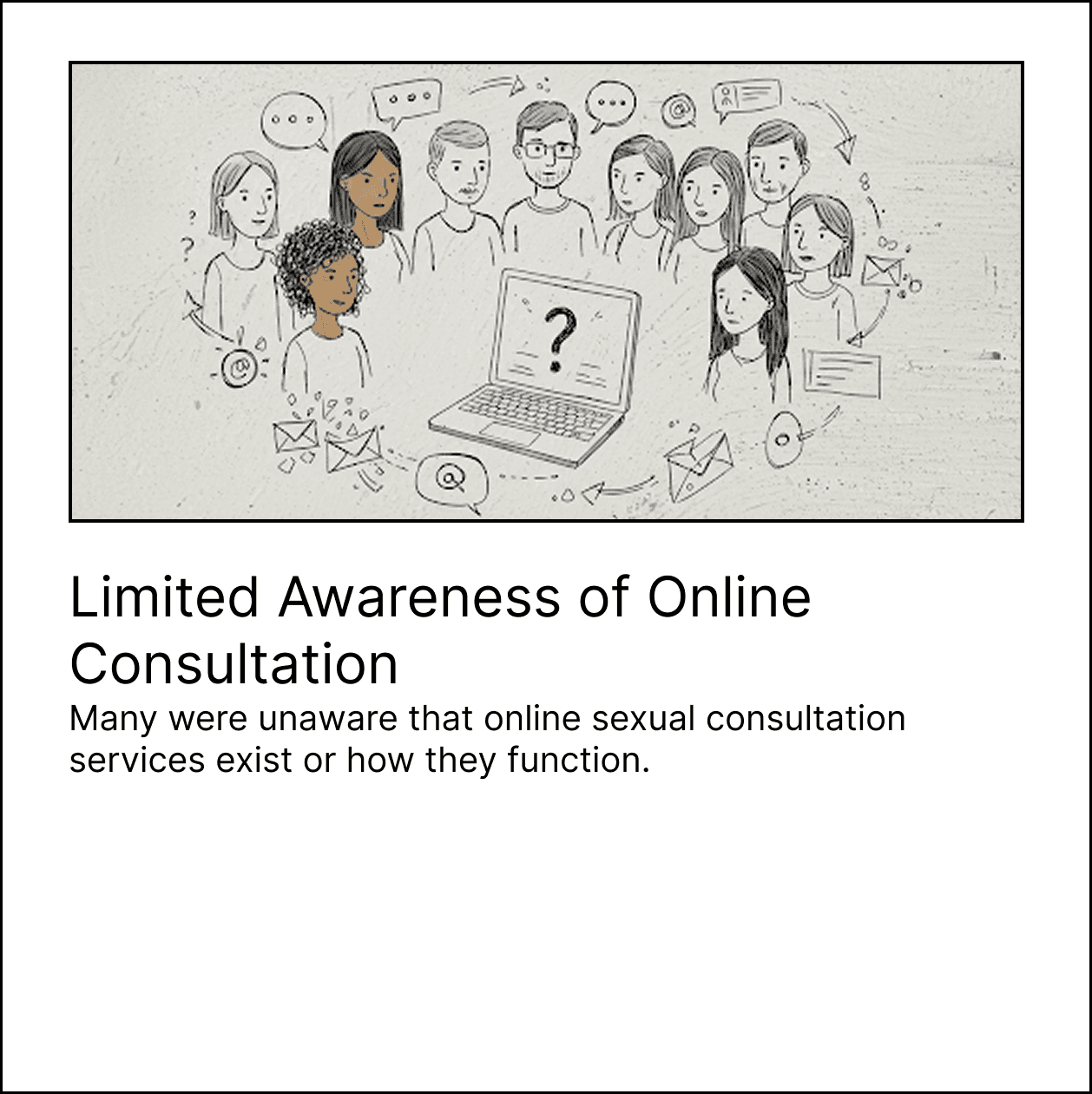
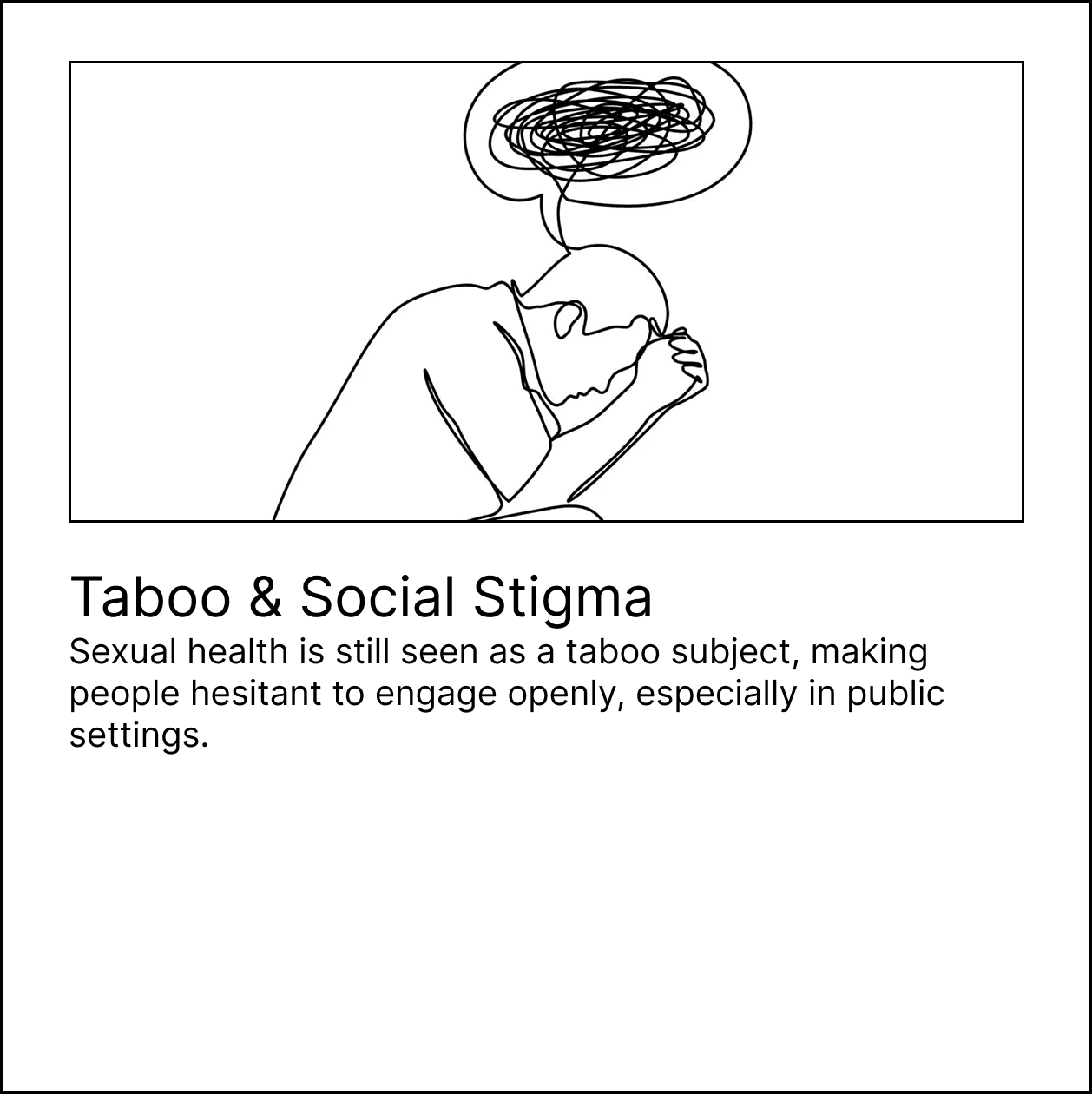
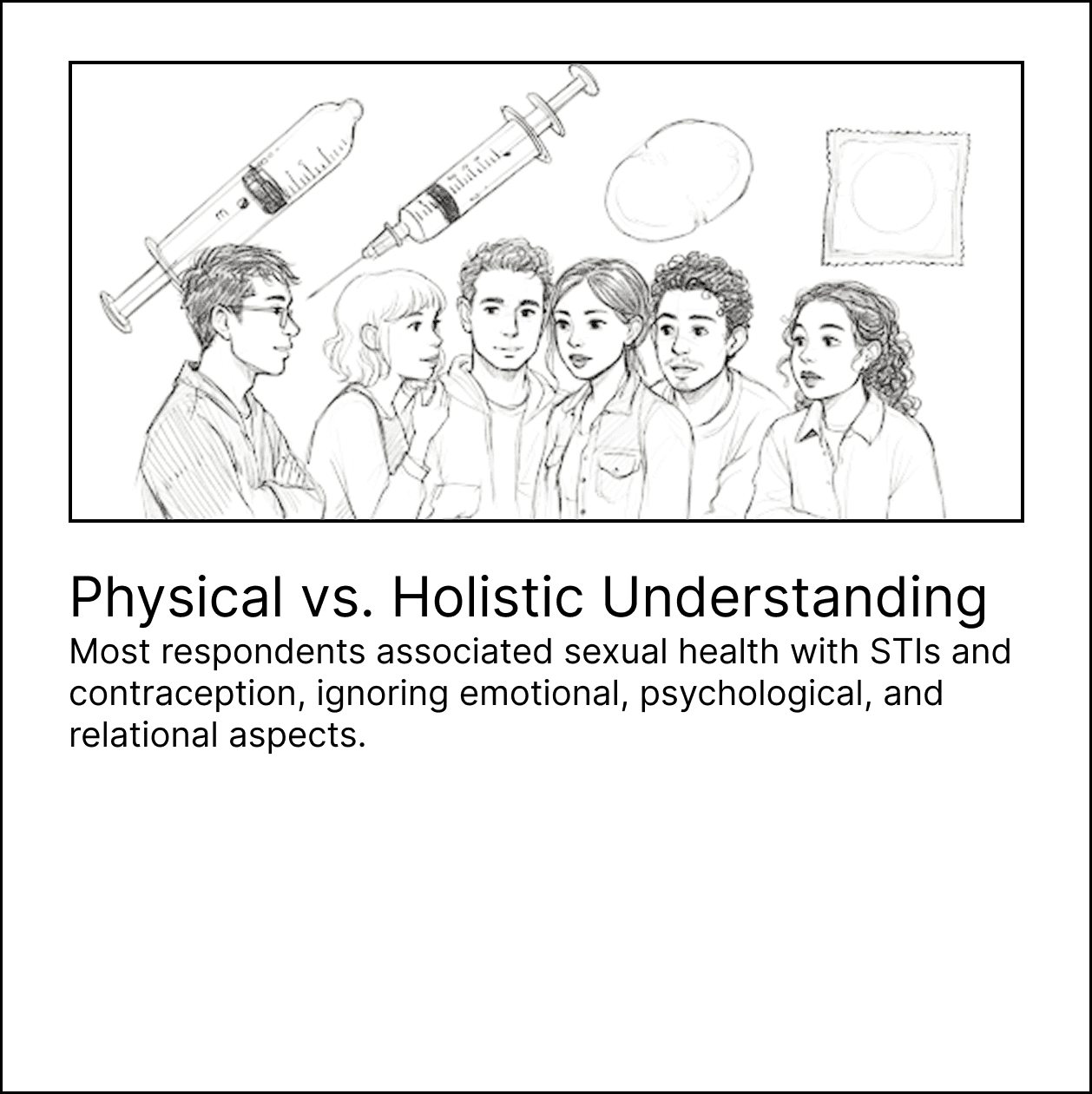


Context Cards
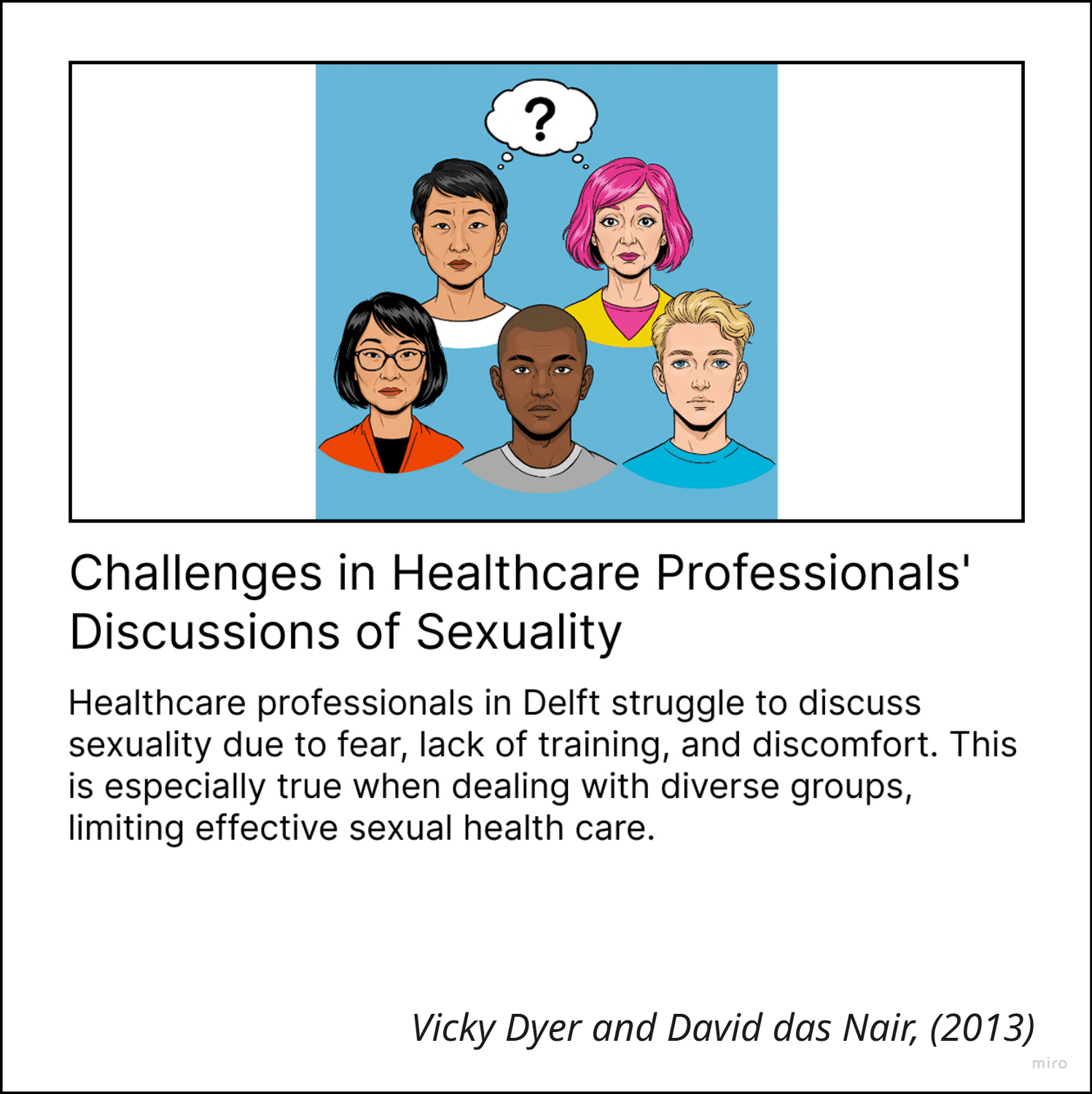
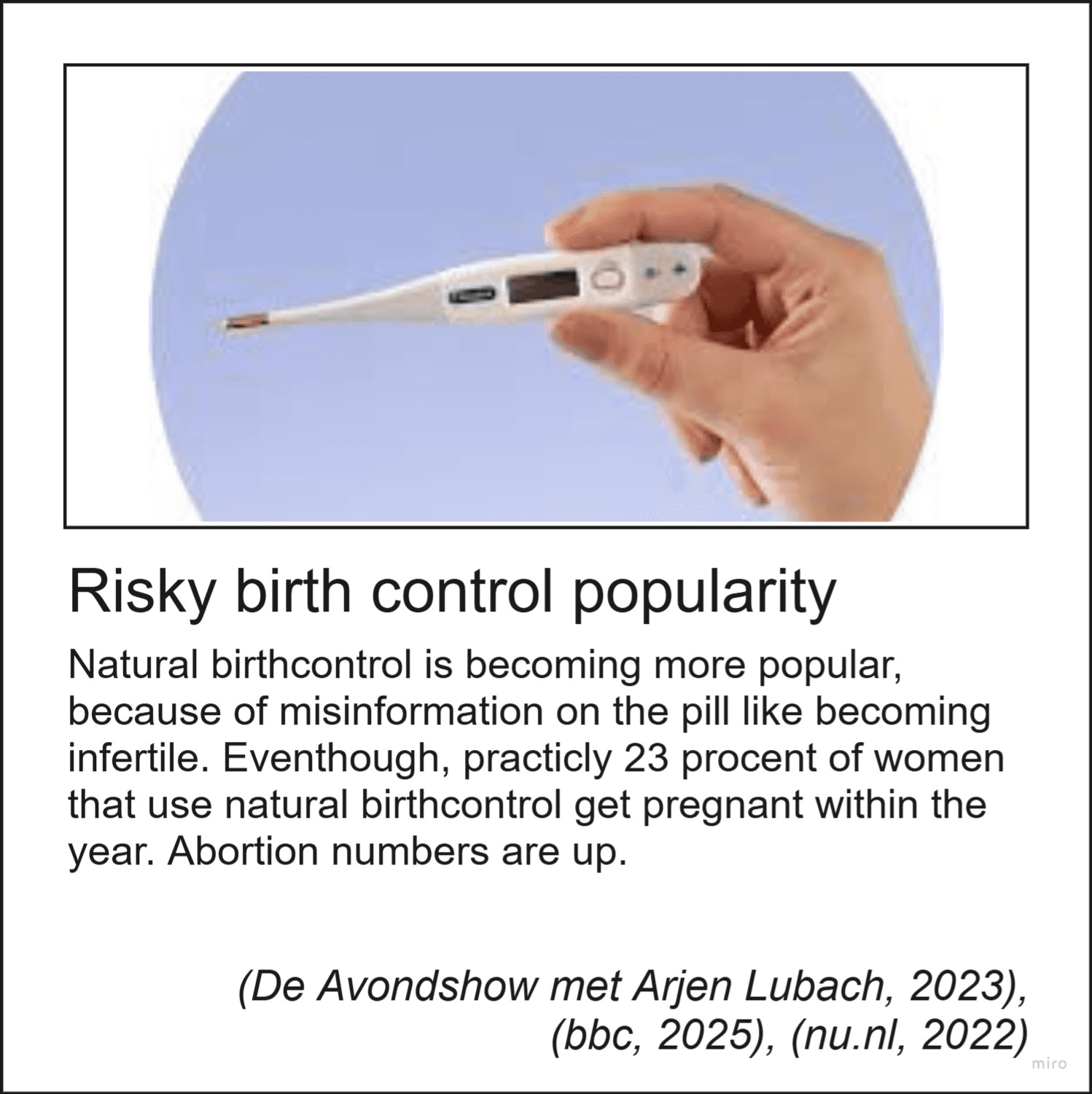
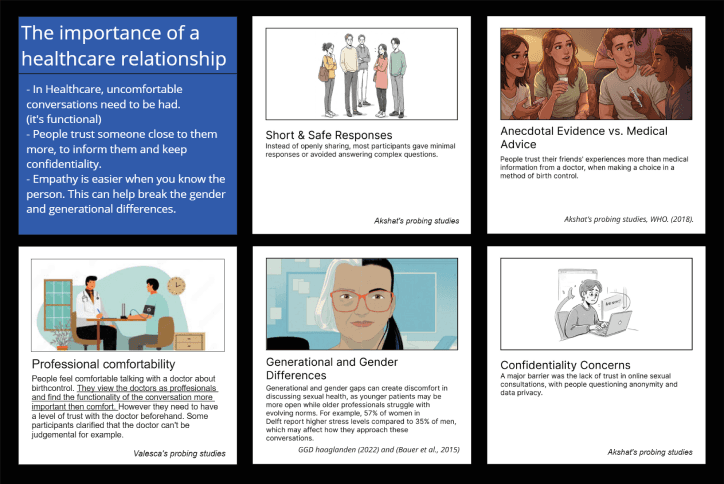
From my probe and secondary research, I created context factor cards that capture the main things influencing how people behave and feel around sexual health.They helped me understand what people really experience and guided the next steps of clustering and shaping our design direction.
Clustering
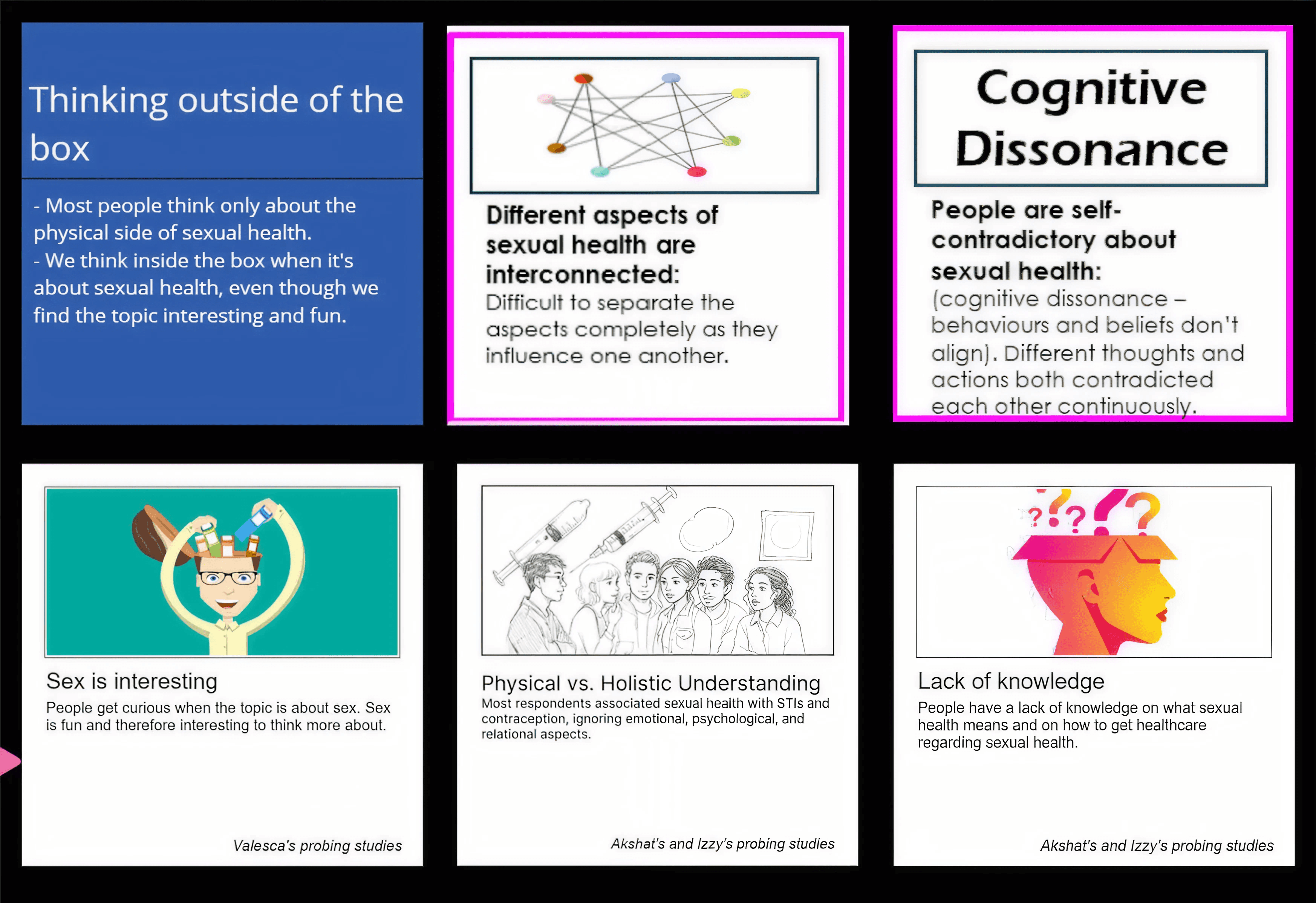
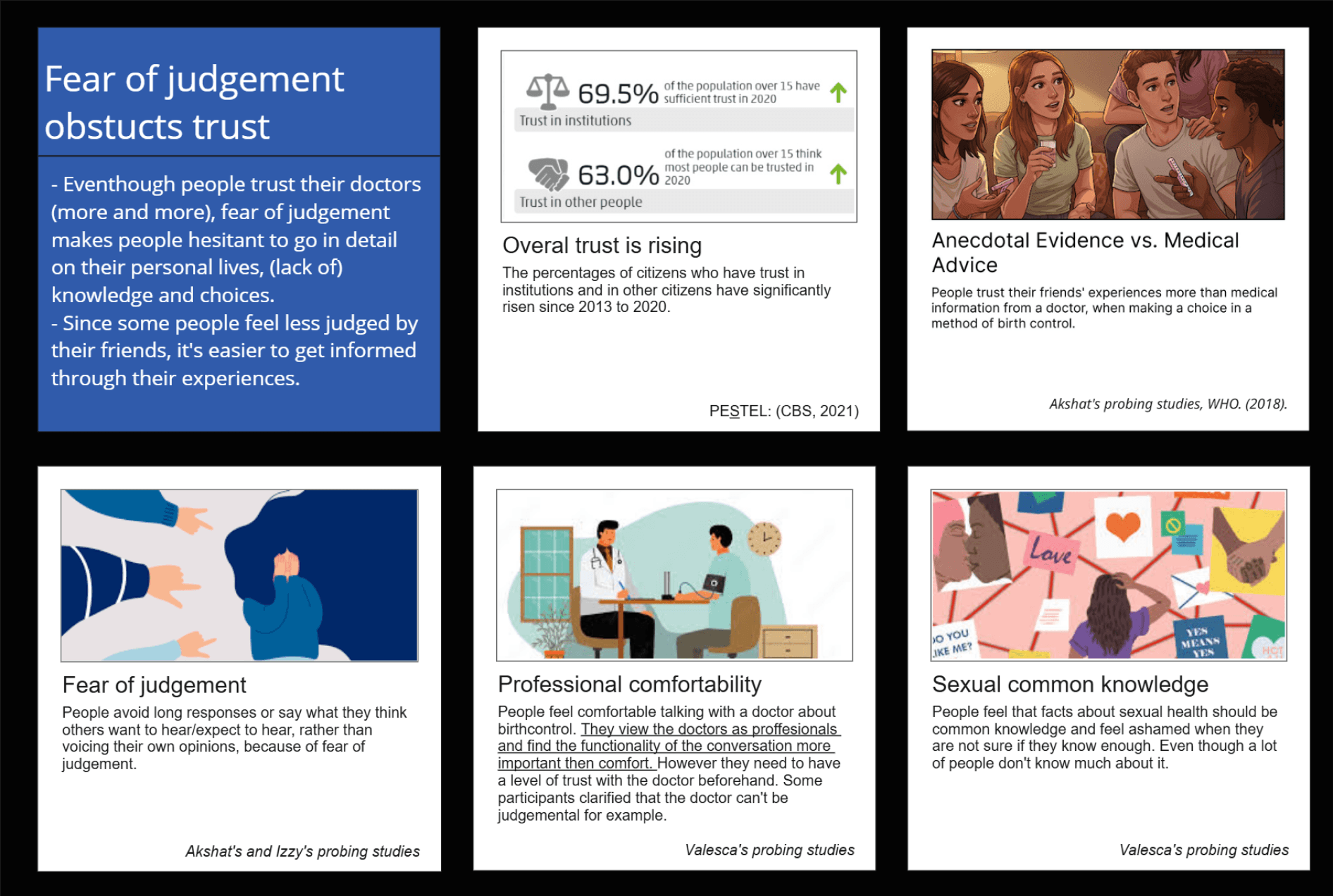
After creating the context factor cards, we grouped them into clusters based on shared themes. This helped me see which issues were connected for example, all the insights related to stigma formed one cluster, while those linked to trust or responsibility formed others. Clustering made the messy probe data easier to understand and allowed clear patterns to emerge.
Future Vision → Design Statement
Our research pointed toward a future where society becomes more open, inclusive, and focused on emotional and mental well being, especially within sexual health. Physical sexual health issues may become easier to treat due to medical and technological advancements, but difficult conversations, stigma, and misinformation still persist. Technology helps people connect, yet it can also increase distance and reduce real human interaction.
View detailed documentation
This future made it clear that people still avoid talking about sexual health, even when tools exist. So as a team, we defined our design statement:
“In order to create a society with an open minded outlook on sexual healthcare, we want people to care for their sexual health before it becomes tangible by feeling responsible for their actions regarding sexual healthcare for themselves and their partners.”


PHASE 3
Choosing a Final Concept
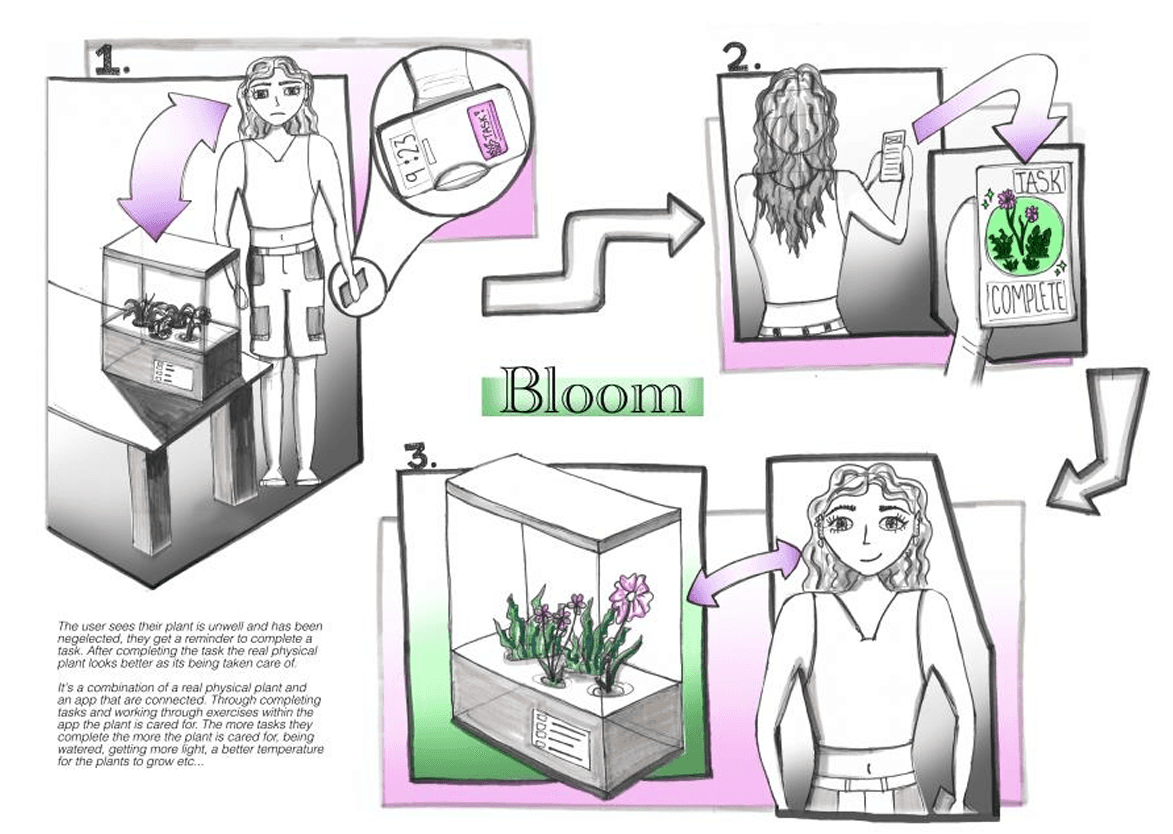
As a team, we began Phase 3 by reviewing all individual visions created in Phase 2. We collectively chose Izzy’s concept, a physical plant box connected to an app, because it clearly expressed our design statement and created a strong emotional metaphor between care for a plant and care for one’s sexual health.
User Testing
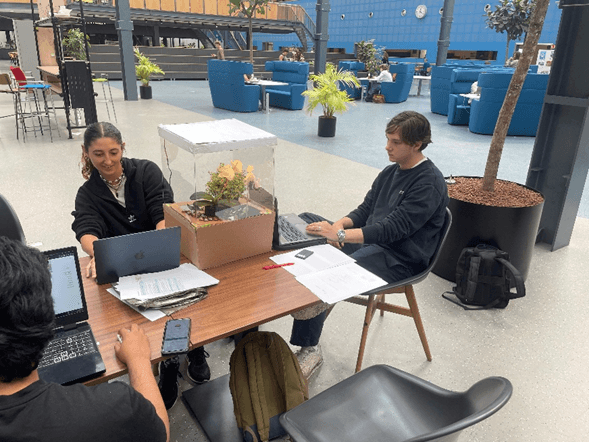
We tested the prototype in the IDE building with voluntary participants in a public setting.
Participants used the app, completed tasks, and observed how the plant reacted.
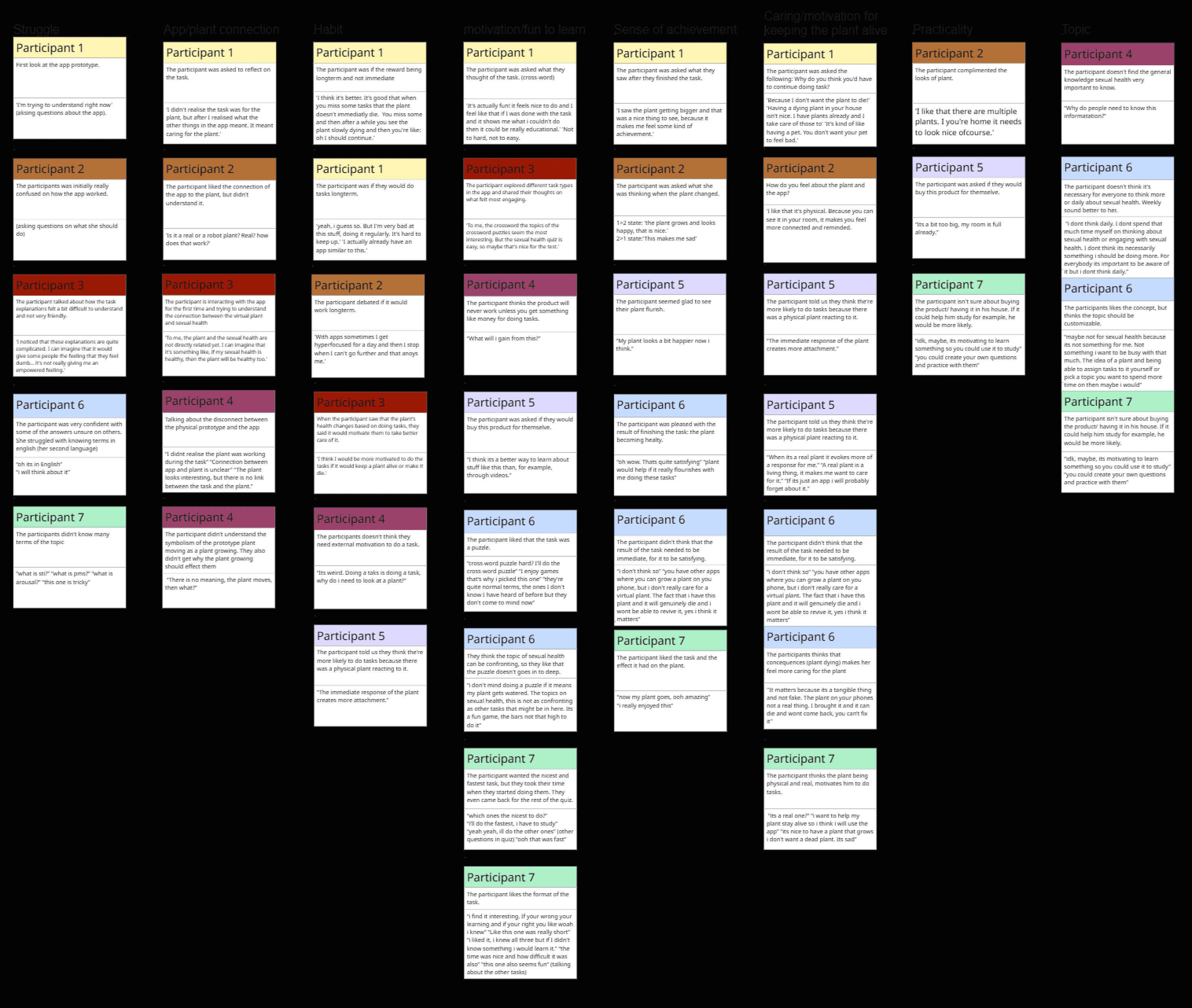
We asked them to describe what they saw and how it made them feel, so we could study emotional responses rather than usability alone.
We gathered:
audio recordings
direct behaviour observations
quotes
Thanks for watching
Harvest
Installation Design
Healthy Hero
UI/UX Design
Yester - Tower
Strategy Design
FDP
Experience Design
(Coming Soon)
TDV Library
UI/UX Design
Conclusion
This phase turned our chosen vision into a functional experience, tested real user emotions, and refined the concept into a more meaningful and realistic product. Bloom now stands as a physical-digital system that encourages responsibility, habit building, and awareness in a gentle, intuitive way.
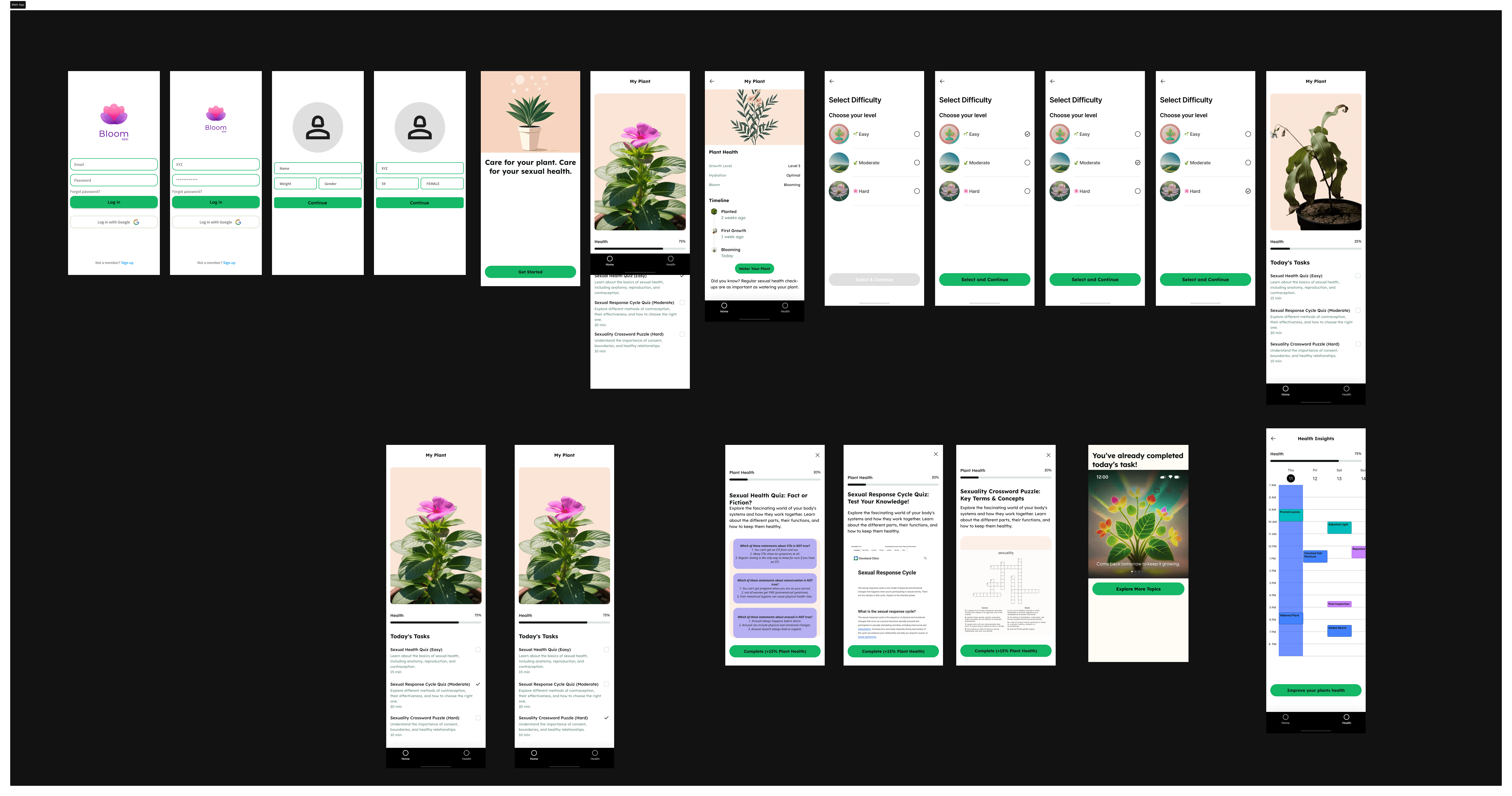
Building the Prototype
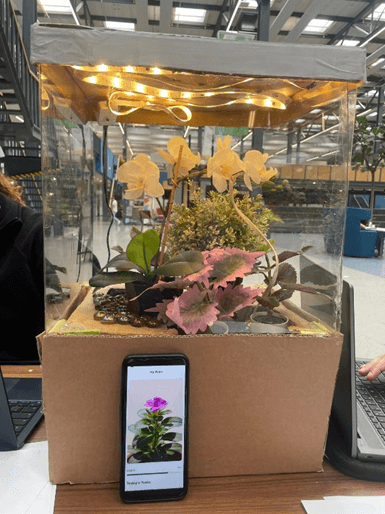
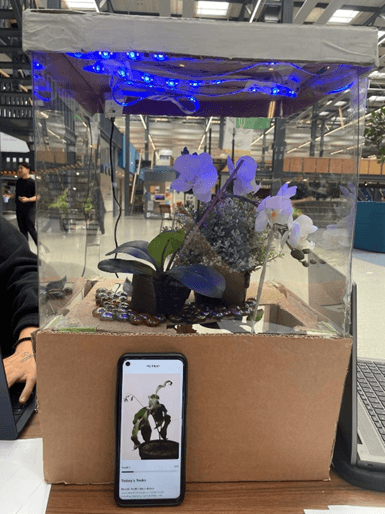
We translated the chosen vision into a mid fidelity working prototype:
A Bloom app with weekly tasks easy, medium, hard.
A physical plant box that changed states healthy or unhealthy using lights and movement.
Tasks printed physically to simulate the real experience.
This allowed users to experience both digital learning and physical consequences of their actions at the same time.
PHASE 2
Individual Exploration and Interaction Vision
In Phase 2, I moved from group research to developing my own design direction based on our shared design statement. I began by redefining the problem through my personal lens and narrowing my focus to
young couples aged 18–25 and their challenges around consistent sexual health communication.
Using the ViP method, I translated future insights into an analogy based interaction vision, choosing the metaphor of watering a plant together to represent shared responsibility and gentle, ongoing care.
To communicate this vision, I created a video prototype called “Intimacy Garden”, showing how emotional and sexual well being can be nurtured through small, consistent actions. The video expressed the interaction qualities I wanted to evoke collaborative, proactive, warm, and reflective and illustrated how these could shape a meaningful digital experience for couples.
View Video Prototype