Interventions to tackle the Urban Heat Island (UHI)
Client - Foster + Partners
Strategy Design
2-4 min read
My Role
Researcher and
strategist
Team
Akshat Choudhary
Dhimant Badan
Duration
3 months
What Did I do?
User Research
Strategist
Prototype
Overview
Yester Tower is a research-driven design investigation for Foster + Partners addressing the Urban Heat Island (UHI) effect in Delhi. We explored traditional cooling strategies stepwells, garden fountains, Mughal airflow techniques, and Badgirs to identify culturally rooted, low-energy interventions. Through site research, material study, and performance thinking, we selected Badgirs as the most adaptable and effective element to be reinterpreted into modular rooftop devices.

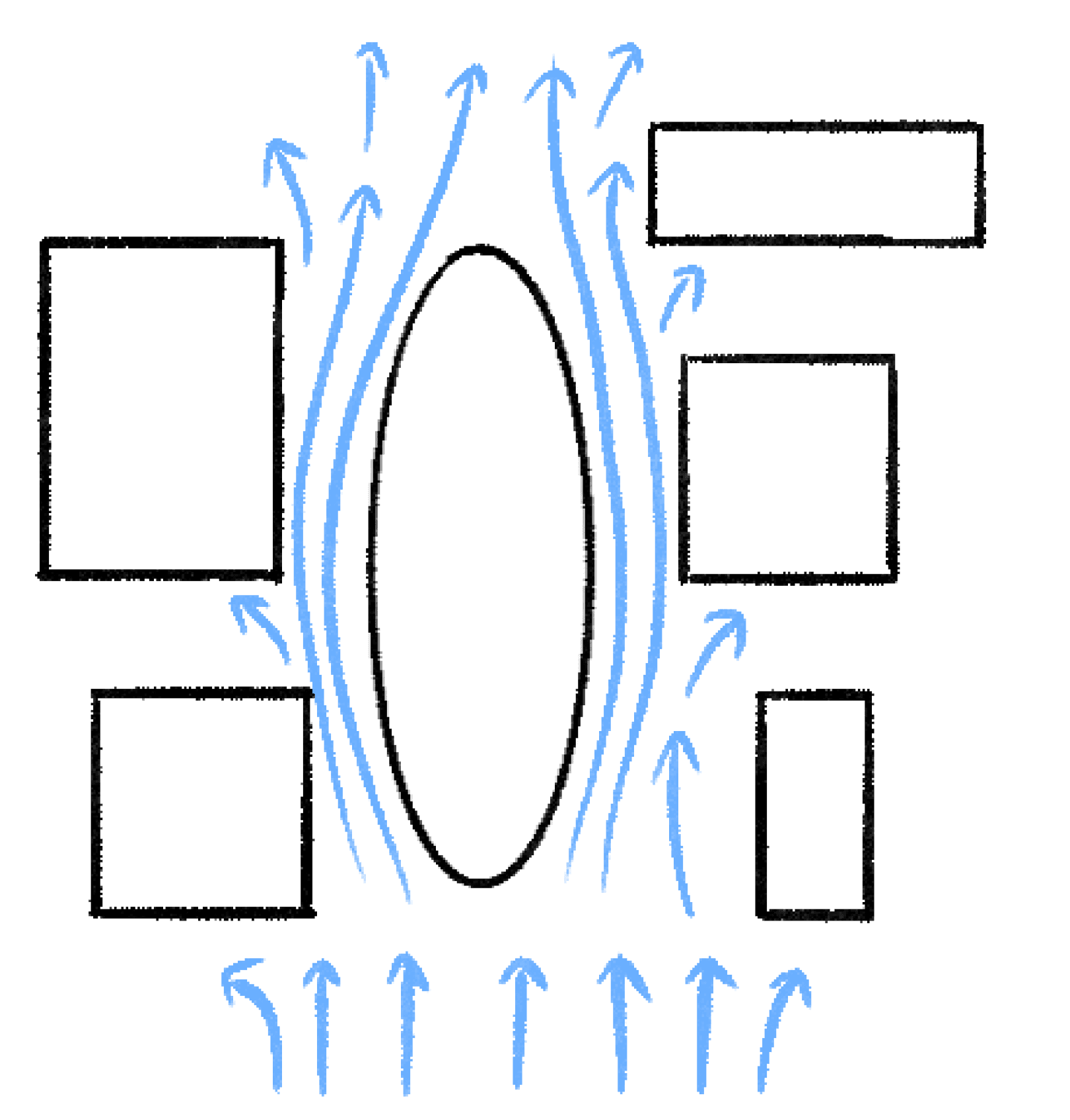
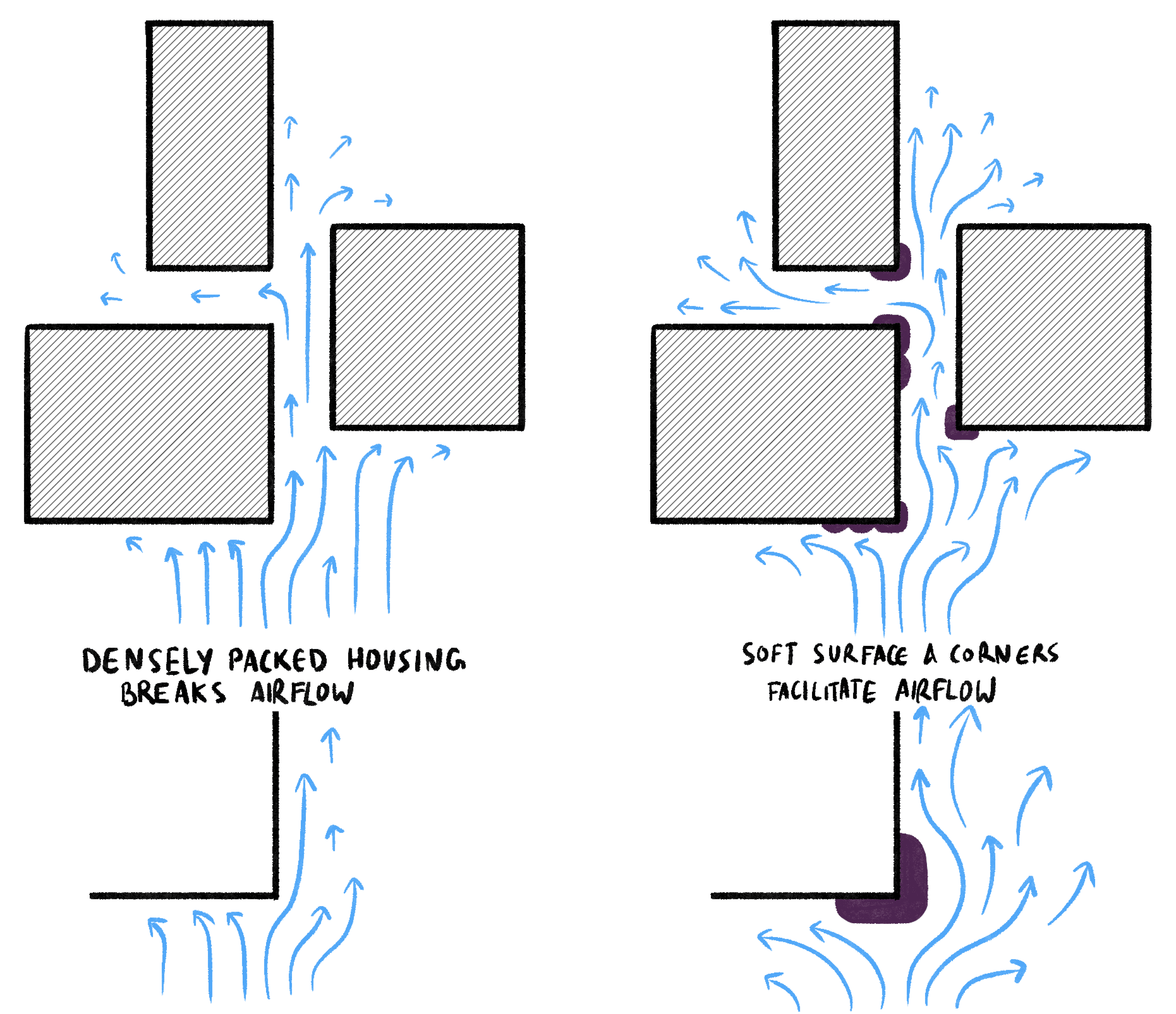
CORNER ACCELERATION

Thanks for watching
Bloom
Speculative Design
Harvest
Installation
TDV Library
UI/UX Design
FDP
Experience Design
(Coming Soon)
Healthy Hero
UI/UX Design
Akshat Choudhary
Scroll to top
Get in touch

Lets create cool things together
Made with lots of love, coffee and framer (of course!)

In conclusion, our innovative solution for tackling the urban heat island effect, designed for our esteemed client Foster + Partners, draws inspiration from the time-tested principles of Badgir and ancient Mughal techniques of passive cooling. By seamlessly blending traditional wisdom with contemporary design, our proposed product promises a sustainable and efficient approach to mitigate urban heat island challenges.



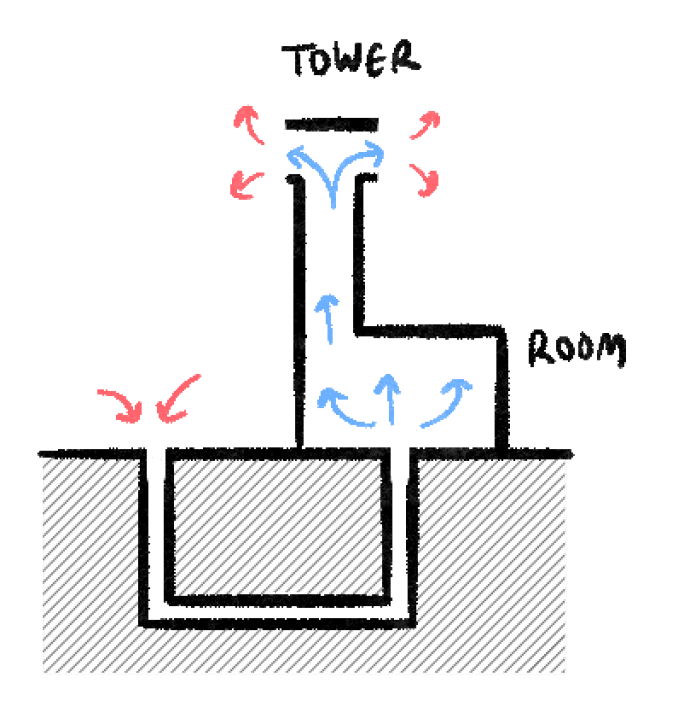
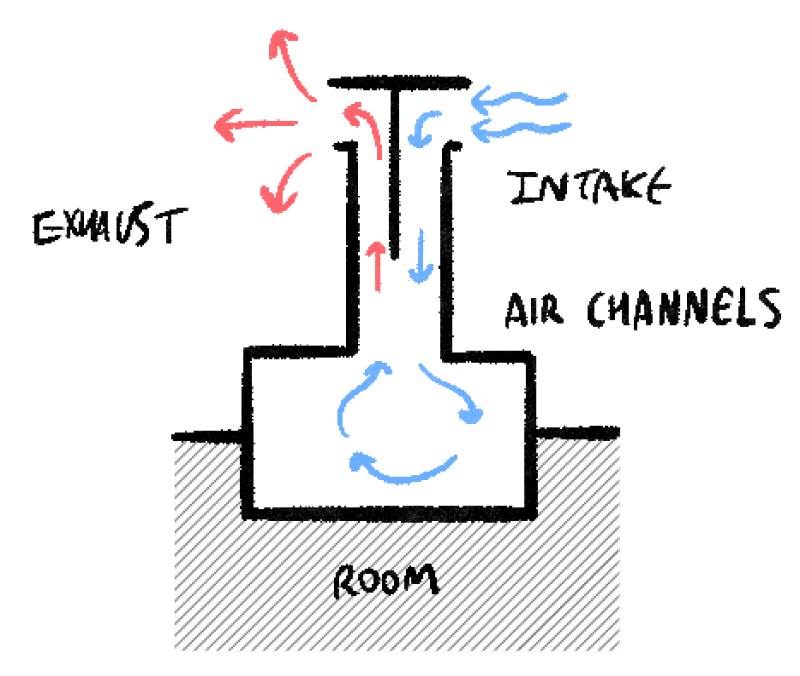
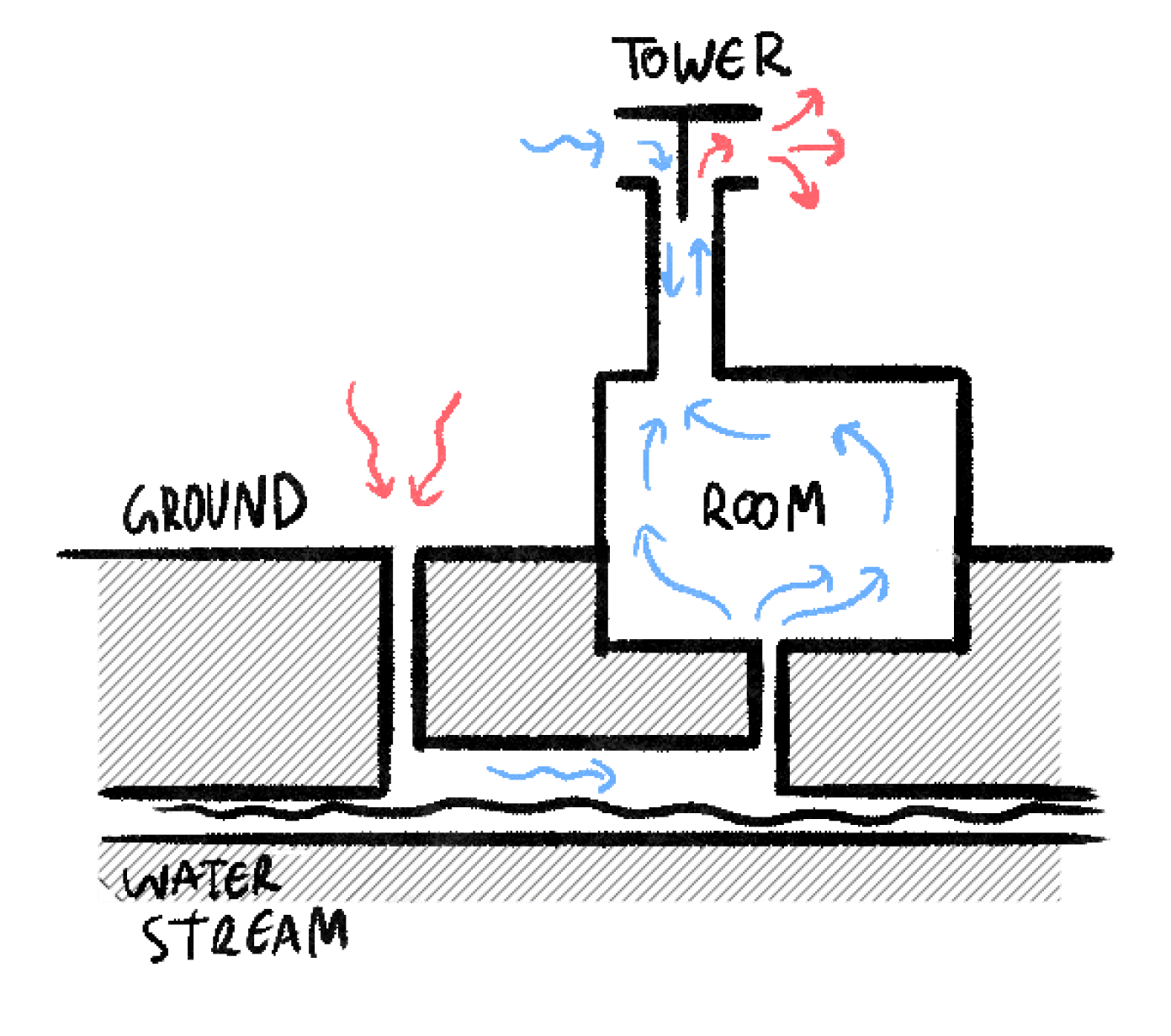
In Persian, “Badgir” (بادگیر) refers to the traditional structure known as a windcatcher, wind tower, or wind scoop. Originating in Iran (Persia) they were also present in the pre-freedom India.
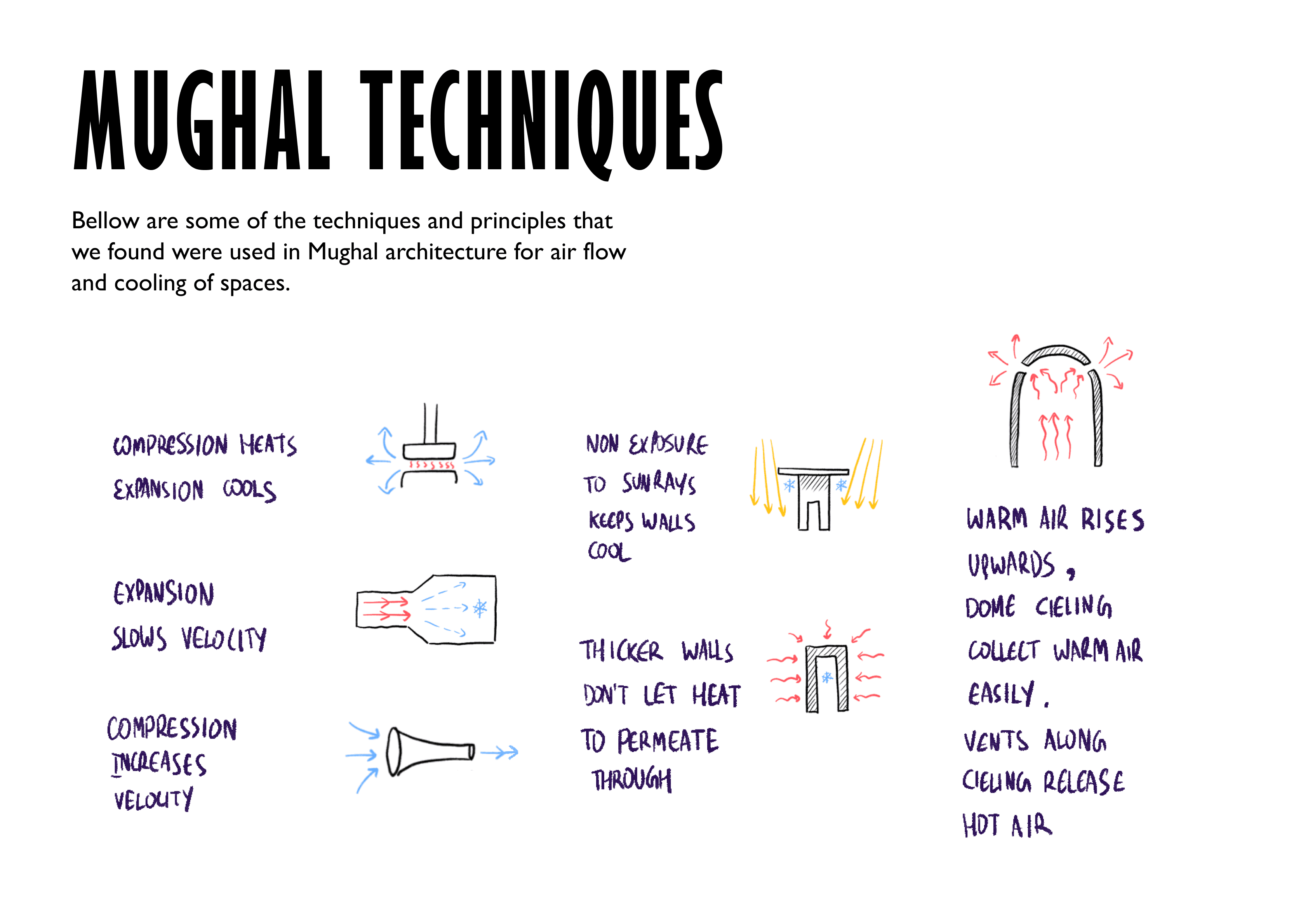
These structures are used to create cross ventilation and passive cooling in buildings by the use of air pressure and other airflow techniques,
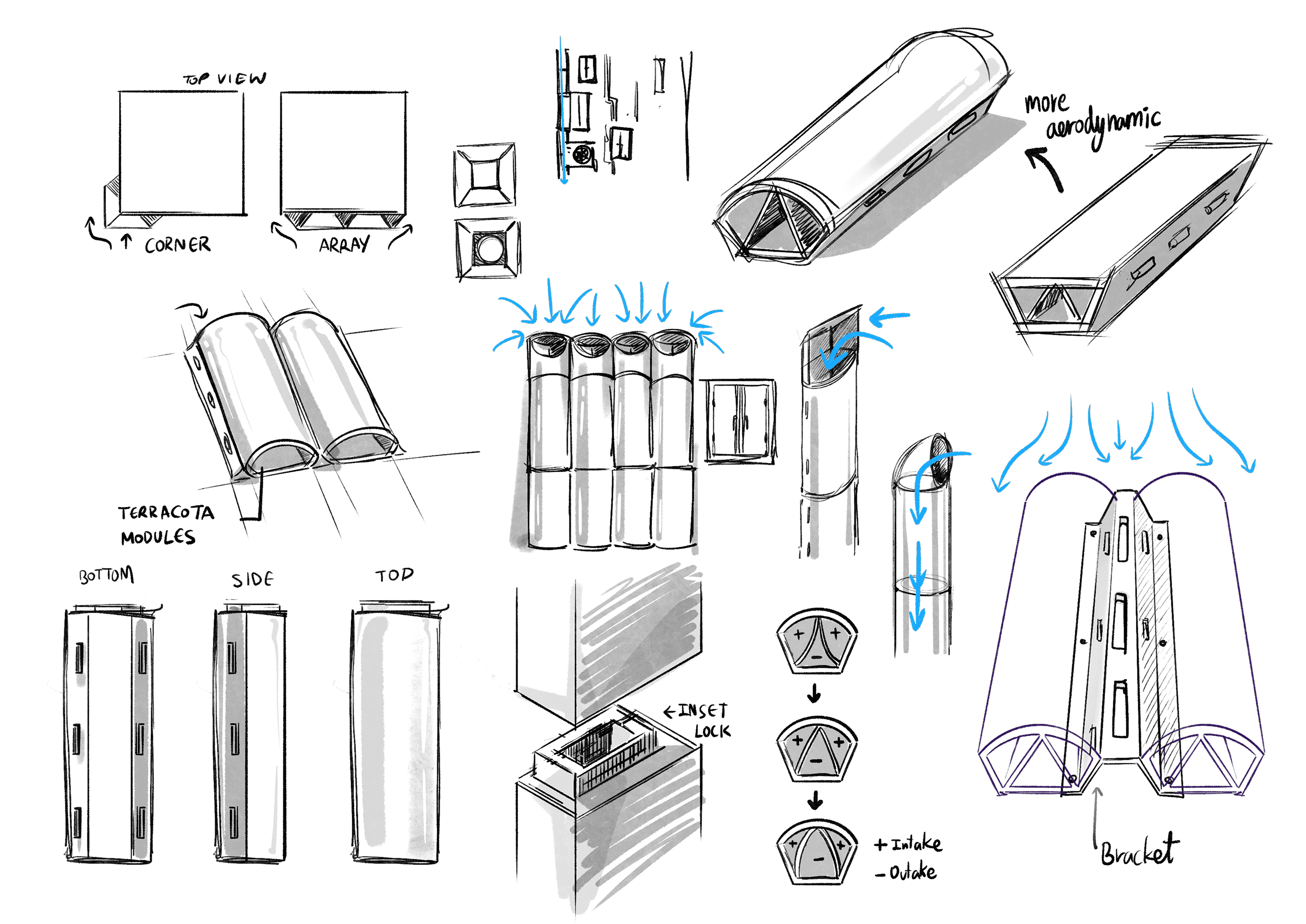
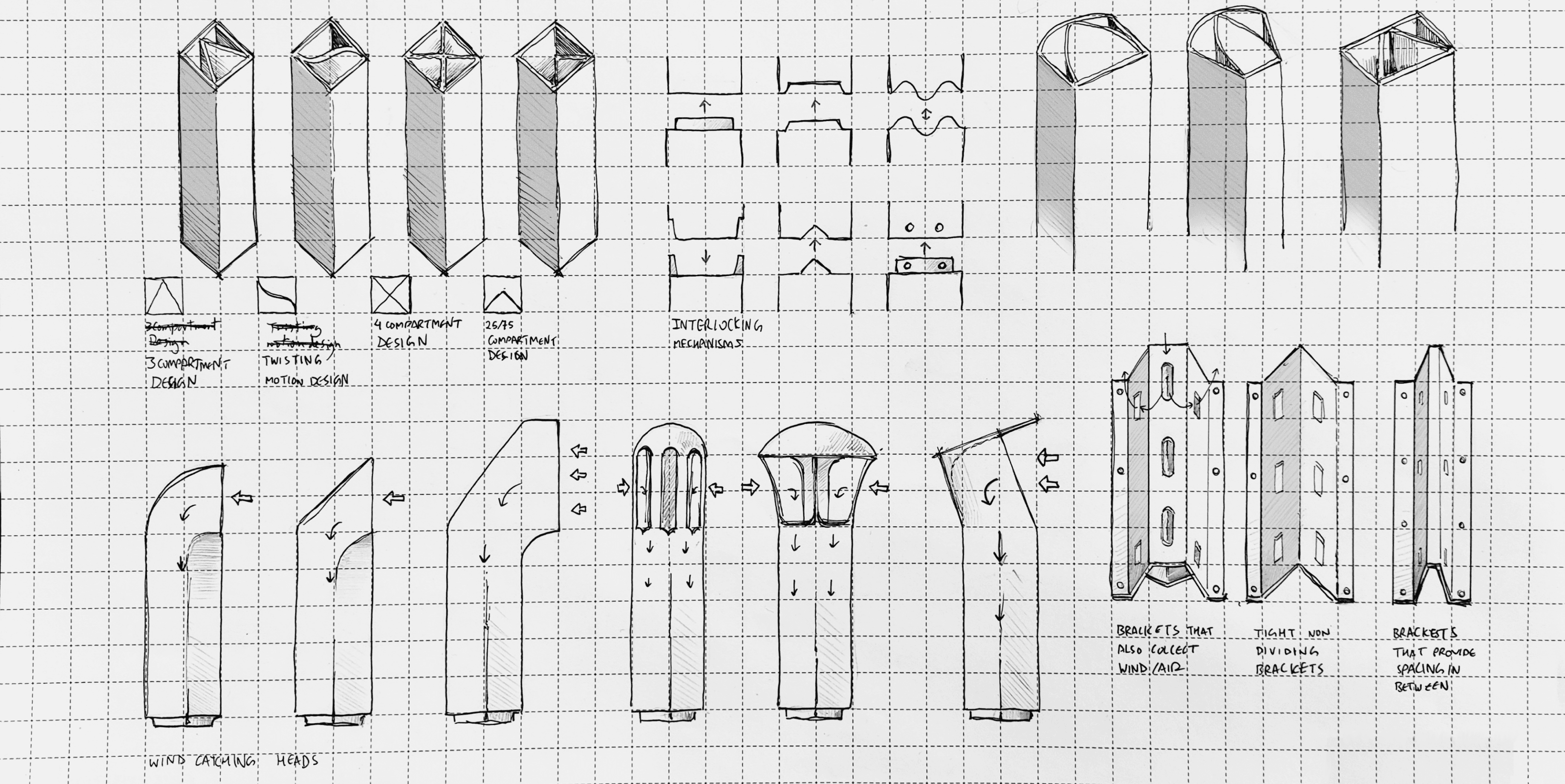
SKETCHES

Introducing
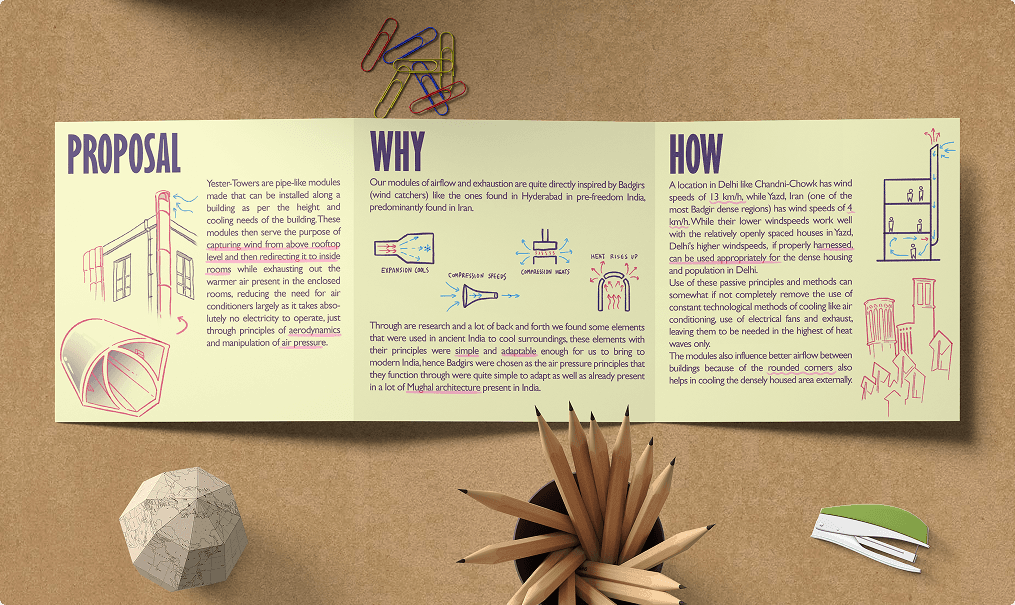
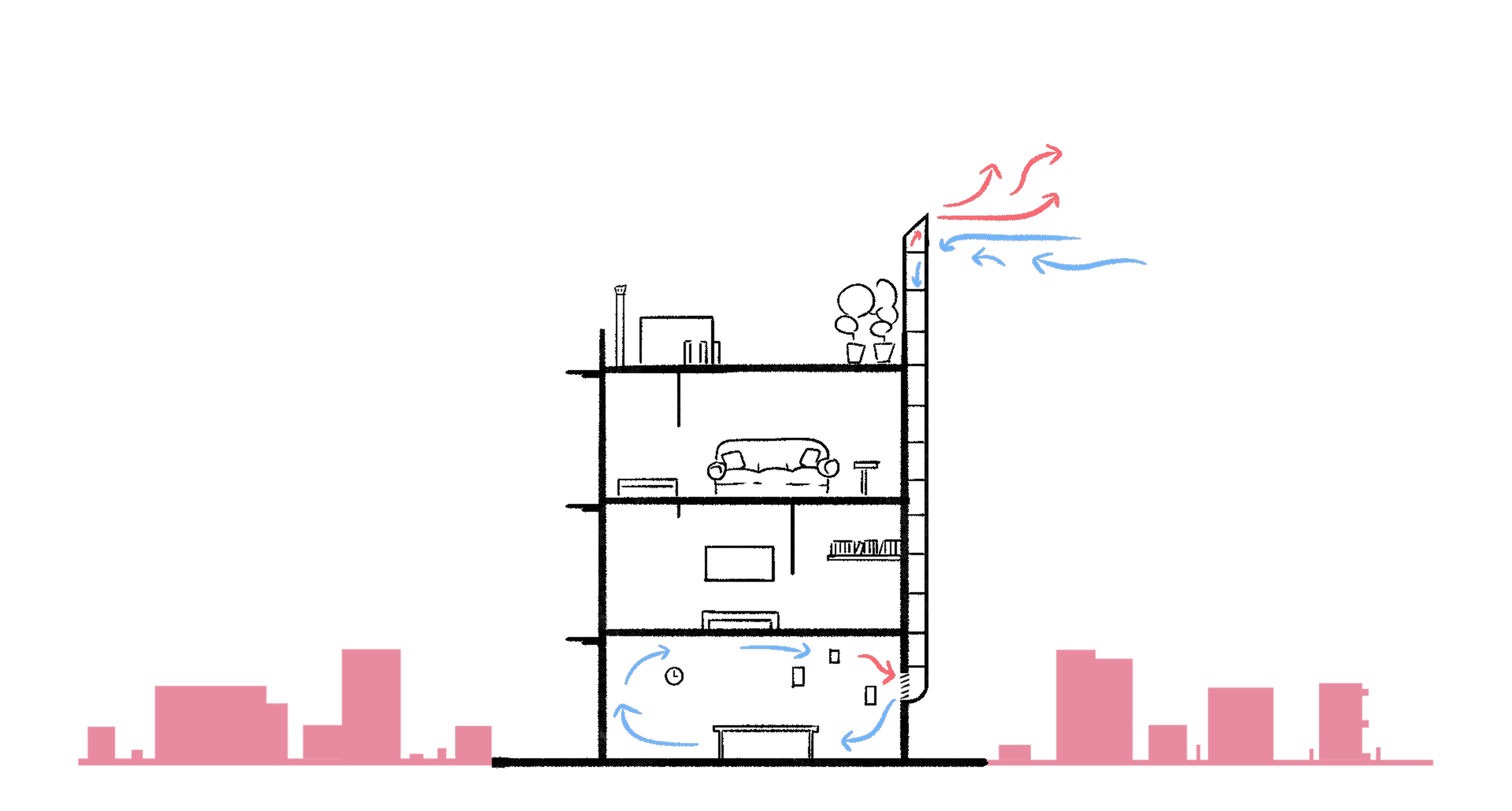
Yester-Towers are pipe like modules made of metal steel and terracotta that can be installed along a building as per the height/cooling need of the building. These modules then serve the purpose of capturing wind from above rooftop level and then redirecting it to inside rooms while exhausting out the warmer air present in the enclosed rooms, reducing the need of air conditioners largely as it takes obsoletely no electricity to operate just principles of aerodynamics and manipulation of air pressure.
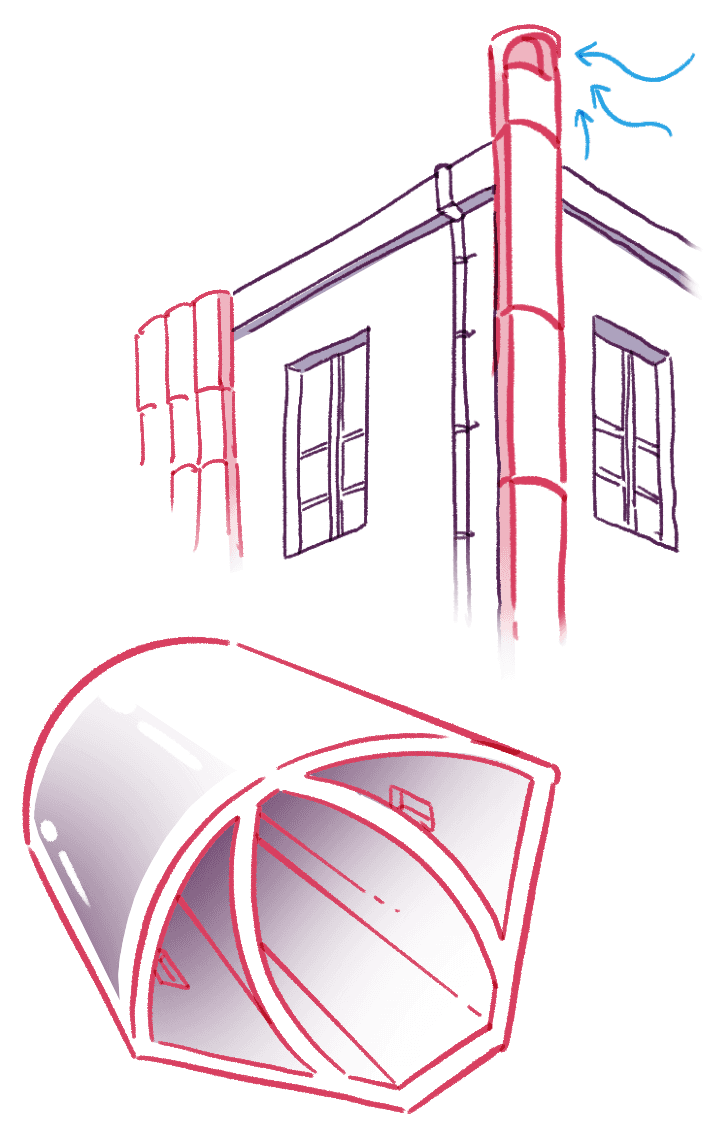

The air flow of a Badgir is shown in the bellow diagrams with few variations in the layout while the actual principle behind it all remains the same
Project Brief
Proposing interventions to address the Urban Heat Island effect in Delhi using indigenous, culturally rooted, and alternative cooling strategies.
Our Understanding of Urban Heat Islands
An Urban Heat Island occurs when a city or a region experiences much warmer temperatures than nearby areas. The difference in temperature between such not so geographically far away areas has to do with how well the surfaces and infrastructure of the environment absorb, trap and release heat.